152 currently discoverable titles

Lore Books

Collectible books, drop chances, reading rules, series, and revealed text.

Reading rules

How lore books work

Book text is collapsed below so titles can be searched without exposing the contents.

Reading time
1 hour of active expedition time
Equipment slot
Book slot on a field-party member
Drop selection
Unread titles have 4 times the weight of read titles
After reading
The book returns as an item and its text is recorded in Lore
Duplicates
Read duplicates cannot be equipped, but they can be stored or sold
Stack size
One book per inventory slot
Drop rules

Chance by source

A successful source can award at most one eligible lore book. Titles tied to an expedition, character, or Pinnacle become eligible after the corresponding discovery.

Unlocking a title makes it eligible for a drop; it does not award the book. Legendary lore books drop only from Pinnacle bosses, not ordinary chests, Guardians, or Pinnacle reliquaries.

SourceChanceRarity weights
Ordinary enemy0.3%Normal 20 · Common 8 · Magic 2
Threshold Boss1%Normal 20 · Common 8 · Magic 2
Depth Boss6%Normal 10 · Common 6 · Magic 4 · Rare 20
Expedition Guardian12%Normal 6 · Common 4 · Magic 3 · Rare 20 · Epic 5
Pinnacle boss25%Normal 4 · Common 3 · Magic 2 · Rare 20 · Epic 10 · Legendary 2
Chest2.15%Normal 20 · Common 8 · Magic 2
Pinnacle reliquary3%Normal 20 · Common 8 · Magic 2
Book catalog

Discoverable titles

Open a record to reveal its text.

2 results
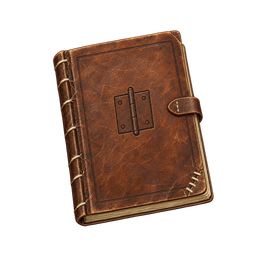
C036 · CommonThe Work in a Broken DoorA fitter's account of recovering useful parts from a Moonfen ruin.Moonfen Salvage ReachReveal book

Two salvagers dismantle a ruined door and discover how much skilled work survives in its smallest fittings.

Catalog code
C036
Rarity
Common
Expedition
Moonfen Salvage Reach
Unlock
Discover Moonfen Salvage Reach
Drop sources
Ordinary enemy, Threshold Boss, Depth Boss, Expedition Guardian, Pinnacle boss, Chest, Pinnacle reliquary
Weight
0.5 lbs
Aurel value
250
Series
Moonfen Field Records, volume 2 of 2

The apprentice wanted to bring back the whole door. It lay face down beside a collapsed memorial entrance, with one corner sunk into the mud. The upper edge was green with corrosion. Something beneath it made a hollow knocking sound whenever we pulled.

We cleared the sides with our shovels before trying again. A root had grown through the lower hinge. The sound came from a loose cover plate striking the frame, not a sealed compartment full of valuables. The apprentice was disappointed. I was pleased that we could finally see what we were lifting.

The door itself was too damaged to use. Its outer plate had split, and the inner braces had twisted under the fallen stone. The fittings were better. Each hinge turned on a pin that could be removed without cutting the body apart. A small channel carried grit away from the joint. The maker had left room around the fasteners for a tool, even where nobody would see the finished work.

We laid the recovered pieces on a strip of cloth. Three hinge bodies, one straight pin, three sound brackets, a latch spring, and most of the fasteners. The apprentice kept reaching for a hammer. I gave him a brush. Mud hides the seam you need, and a heavy blow can turn a repairable fitting into ordinary scrap.

One bracket carried three different sizes of hole. It had been fitted to something else before it became part of this door. The newest holes were cleanly drilled; the oldest had worn slightly oval. I showed him where a previous worker had filed one edge to clear a moving arm. It had been reused more than once, and the last repair was still holding.

By the time we finished, he was checking the underside of each part before putting it away. He found a hairline crack in the last hinge body. We left it with the scrap and kept its sound pin.

Back at the workshop, one bracket went onto a bench clamp. The latch spring repaired a tool chest. The two good hinges took longer. We cleaned their channels, fitted new pins, and mounted them on the heavy drying-cupboard door that had dragged across the floor for years.

The apprentice opened and closed it several times. Then he fetched the carpenter who had told us to replace the cupboard. They spent the rest of the afternoon arguing over the fit while I unpacked the remaining fasteners.

View physical item record →
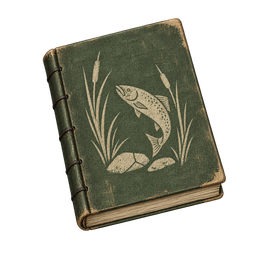
N036 · NormalFish beneath the Fallen StoneA salvage crew's cook describes fishing the Moonfen pools.Moonfen Salvage ReachReveal book

A cook finds supper among the flooded memorial ruins and learns where the fish shelter beneath the stone.

Catalog code
N036
Rarity
Normal
Expedition
Moonfen Salvage Reach
Unlock
Discover Moonfen Salvage Reach
Drop sources
Ordinary enemy, Threshold Boss, Depth Boss, Expedition Guardian, Pinnacle boss, Chest, Pinnacle reliquary
Weight
0.5 lbs
Aurel value
100
Series
Moonfen Field Records, volume 1 of 2

We caught our first Moonfen reedfin between two submerged stone benches. Reeds had rooted in the cracked paving around them, and small fish moved through the gaps beneath the seats. Our shovel crew had passed the pool twice without noticing anything worth carrying away.

I was the cook. I noticed supper.

The bank looked firm until I pressed a pole into it. A mat of roots covered a deep pocket of mud beside the nearest bench. I moved back to the gravel, kept my basket within reach, and cast along the edge of the reeds. My first two casts caught stems. The third brought up a reedfin no longer than my hand.

More followed. They gathered where the current carried scraps of food against the broken stone. Farther out, a mirror carp turned beneath the open water. I could see its broad side each time it crossed a pale slab, then lost it against the dark bottom. One of the shovel crew insisted it was the same fish circling to inspect us. We argued about that until he caught it.

The ruins make small habitats all through the Reach. Fallen slabs shelter fish from larger hunters. Roots bind the loose soil around them. A narrow opening between two blocks may carry enough water to keep a pool clear while the hollow beside it fills with silt. Pools a few paces apart can offer very different fishing.

They also offer cover to things that eat the fisher. A Mudlung Pouncer had settled beneath a leaning section of wall across from us. We saw it when it shifted its hind legs against the bank. We packed our catch and took the longer path around. Nobody wanted to test whether it preferred carp.

I made chowder from the reedfin and cut the carp into portions for supper. The bones went into a separate pot for stock. We had brought dried food for the journey, but after hours of wet work the crew ate every bowl I filled.

Later trips taught me to bring heavier line for the lantern eels and a larger wrapping cloth for crown perch. I also began packing my hooks above the salvage tools. On that first trip a bent door fitting had crushed the hook box. Straightening fishhooks beside a hungry crew is slow work, and everyone has advice.

View physical item record →