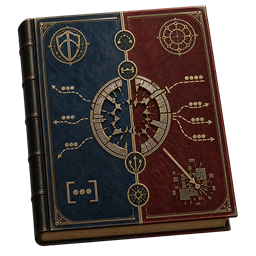
Two official histories of the Siege of Hallow Port, each describing the same arrests, convoys, memory weapons, and destroyed gate as necessary actions by opposite sides.
First account: The Defense of Hallow Port
Hallow Port received a verified forecast that its primary gate would be captured and used to move weapons against three civilian worlds. Port authorities closed the gate, suspended departures, and detained people identified as likely collaborators.
The attacking fleet arrived two days later under the claim that it was escorting refugee convoys. Its warships concealed memory-lances among medical and passenger vessels. Witnesses exposed to those weapons gave conflicting reports of commands, uniforms, and events they had observed minutes earlier.
Defenders kept the gate closed while three approved evacuation convoys departed by secondary routes. When attackers breached the outer station, the gate crew destroyed the primary harmonic core. This prevented military capture and ended the siege.
The account calls the detained residents collaborators because later forecasts continued to place them inside a successful enemy occupation. It records no completed act of sabotage by most of them.
Second account: The Closure of Hallow Port
Hallow Port used a secret forecast to arrest political opponents, foreign workers, and residents who had challenged its emergency council. The council then closed the only gate capable of receiving refugee convoys from the fighting outside the system.
The relief fleet carried memory-lances because Hallow Port had already altered public records to erase detainees and change the forecast used to justify their arrests. The weapons were intended to recover suppressed testimony and disable the council's archive controls. Their use caused additional memory damage that the account admits was not limited to military targets.
The council's three approved convoys carried officials, sponsors, and selected households out of the port. Refugees remained outside the closed gate. When the fleet reached the station, the defenders destroyed the harmonic core rather than allow an independent review of the forecast and detention records.
The account calls the fleet a relief force. Its own cargo lists include weapons, occupation staff, and contracts dividing control of the port after capture.
Binder's comparison
Both accounts identify the same broad events. A forecast predicted the gate's capture. Authorities detained residents before any attack. The gate closed while three approved convoys departed. The arriving fleet carried refugees and military weapons. Memory-lances were used. The defenders destroyed the gate.
They disagree about the forecast's source, the reason for the detentions, who was aboard the departing convoys, whether the incoming fleet intended rescue or conquest, and what evidence the destroyed gate would have exposed.
Surviving passenger manifests support parts of both accounts. Refugees were present in the incoming convoy. So were occupation staff. Families left aboard the approved departures. So did council officials. The detention archive contains changed entries, but investigators cannot establish whether the changes preceded the memory attack.
Later writers often combine the favorable claims into a cleaner story: a responsible council evacuated civilians, a relief fleet saved refugees, and the gate was lost in an unavoidable battle. No source supports all three statements together.
The siege shows how the Fracture Wars turned prophecy and memory into weapons. A forecast justified punishment before an act occurred. Memory weapons then damaged the testimony needed to judge that punishment. Every surviving authority had a reason to preserve one sequence and reject the other.
The binding offers no final verdict. Read both accounts. Mark where each admits harm, where each omits evidence, and where they agree despite their opposing conclusions. The shared facts are fewer than either title page promises.