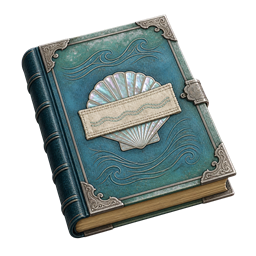
A history of the bathhouses, clinics, recovery homes, adoption courts, and sanctuary ferries built beneath House Vaelorin's white towel and blue tide shell.
House Vaelorin places a folded white towel over a blue tide shell.
The shell represents the protected harbors where the house opened its first clinics. The towel represents the first thing placed into a survivor's hands: warmth, privacy, and something clean before questions began.
Vaelorin institutions spread because they worked. Their bathhouses reduced disease in crowded ports. Their clinics treated workers without household physicians. Their recovery homes gave injured people time away from dangerous jobs. Their ferries moved patients through storms and blockades. Their adoption courts recognized families that other offices ignored.
House Vaelorin made care a form of public power.
The bathhouses
A Vaelorin bathhouse is more than a row of pools. It contains drinking-water taps, laundry rooms, private washing stalls, heated resting rooms, shallow pools, deep pools, steam chambers, and attendants trained to recognize illness or injury.
Water is tested at the beginning of every shift. Separate systems serve bodies that cannot safely share the same salts, medicines, temperatures, or cleaning agents. Visitors are shown which rooms are communal and which can be closed.
The largest houses also contain kitchens, child-minding rooms, message boards, and small clinics. Port workers collect clean clothing before a shift. Elders come for heat and company. Families meet there because the rooms are accessible to people who cannot climb the narrow stairs of older homes.
House money built many of these facilities after local governments failed to provide clean water. Some remain free. Others charge by use, household membership, employer contract, or district contribution. The argument over who pays has never been separate from the argument over who may enter.
The clinics
Vaelorin clinics became known for harbor medicine, surgery, resonant healing, long-term recovery, and the treatment of bodies unfamiliar to local physicians. Their supply network could move medicine, clean water, specialists, and replacement equipment between distant ports faster than many public systems.
The best clinics explain each part of care separately. Examination is not surgery. Surgery is not permission for student observation. A bed for recovery is not an employment agreement. Emergency treatment does not settle what happens after the patient can decide.
The house learned these distinctions through failure as well as skill.
After the Harborside storm destroyed two worker districts, Vaelorin ferries brought survivors to warm baths, clinics, and recovery housing. Mera Sol arrived with a crushed leg and a drowned workshop. Months of treatment saved both her life and the leg.
The same agreement placed her housing, medicine, employment, and discharge inside one Vaelorin system. When she recovered enough to leave, each service depended upon the others. A delayed discharge increased the cost of housing. The greater cost was then used to argue that she needed continued house employment. Mera repaired bathhouse pumps for nine years before a shrine review separated the agreements.
The resulting Clean Towel Rule requires emergency treatment, housing, employment, guardianship, adoption, and long-term recovery to be explained and accepted separately. Some clinics resisted the rule because patients sometimes leave against medical advice. Vaelorin reformers answered with follow-up visits, return routes, clear warnings, and medicine that can travel with the patient.
Recovery homes
Recovery homes stand between a clinic bed and ordinary work. Residents cook, wash, exercise, practice stairs, relearn tools, adjust to prosthetics, and discover which parts of daily life an injury has changed.
Good homes allow residents to attempt real tasks without pretending every failure is a medical crisis. Kitchens have work surfaces at several heights. Workshops hold weighted practice tools. Bedrooms can be rearranged before the resident chooses how their own home should change.
Poor homes confuse safety with stillness. They keep residents from cooking, walking, working, meeting lovers, arguing with family, or making mistakes because preventing all risk is easier than supporting recovery.
Vaelorin physicians disagree openly about the boundary. The strongest recovery programs ask what life the patient is trying to return to before deciding what progress should look like.
Adoption and household courts
Vaelorin adoption courts gained influence by recognizing chosen families, foster parents, shared households, and kinship formed through years of care rather than birth alone. Their witnesses ask who provides food, comfort, discipline, medicine, teaching, and a place to return to.
These courts changed family life far beyond the house. Other jurisdictions began accepting Vaelorin adoption findings because refusing them separated children from the adults actually raising them.
That success gave the house enormous influence. A family approved by Vaelorin could gain housing, school access, travel rights, and medical authority. A family the court distrusted could lose all four at once. House advocates therefore argue over how much a court should judge the customs, income, faith, number of parents, or living arrangements of a household whose care is otherwise sound.
Vaelorin families carry this argument into their own homes. Some treat adoption as the house's greatest tradition. Others refuse to let an institution define bonds that already exist. Both may still hang a white towel at the door when a new family member arrives.
Sanctuary ferries
During storms, wars, outbreaks, and local persecution, Vaelorin ferries carry people to clinics and sanctuary houses. Their crews are trained to provide first aid, protect passengers from exposure, and land at ports whose officials may be hostile to the people aboard.
The ferries have saved thousands. They have also drawn disputes over jurisdiction, quarantine, family authority, and whether a sanctuary house may refuse an official demand for return.
Vaelorin captains are taught that rescue ends the immediate danger. It does not solve every conflict awaiting the passenger on shore.
House Vaelorin's mercy is real. So are its wealth, reach, family influence, and habit of building several necessary services beneath one roof. People praise the house because its towel is often present when nobody else brings one. They watch it carefully because a person who controls the clinic, ferry, bathhouse, recovery bed, and family court holds more than a towel.
The old house instruction remains the best measure of its work: place the towel in the patient's hands. Do not close your own hand over it.