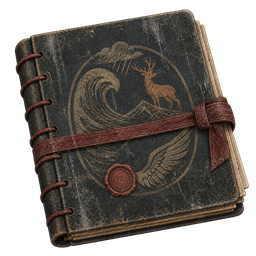
A rain-warped guide to the animals that warn of Sable Writ storms and the local materials hunters gather before, during, and after them.
Weather decides when people can cross the Sable Writ Isles. A storm can close a cliff road, flood a harbour stair, or leave a boat unable to reach the court named on its papers. Instruments are useful, but local animals often react before a harbour reading changes.
Galehook Petrel: These birds ride ahead of storm fronts on hooked wings. A flight coming over the outer ring means the storm is close enough to stop loading cargo and secure loose rigging. Petrels snatch fish, rope, parcels, and exposed fingers without landing. Watch the direction of the flock and keep both hands below the rail.
Razorcrest Stag: Stags graze in sheltered valleys and strip hard coastal bark with their serrated crests. A herd moving uphill or leaving a valley floor is a reliable warning that heavy water or wind is coming. During the rut, the sound of two crests striking can carry across open water. Do not mistake it for a harbour signal.
Ashhorn Boar: These animals root through the ash flats where storms deposit grit, broken cargo, coins, timber, and lost papers. Salvagers often follow fresh rooting after the weather clears. The boar that uncovered an object still considers the ground its own. Wait for it to leave or be prepared for a direct charge.
Inkcedar: This dark aromatic wood is used for roofs, bows, legal tablets, and weatherproof writ cases. Sound trees bend under island wind without splitting. A fresh break exposes pale wood before the cut darkens.
Nightiron: The blue-black ore takes a keen edge and reveals hidden temper lines under moonlight. Hunters use it for knives, hooks, and fittings exposed to salt. Dry and oil worked metal before storing it, no matter what the seller promised.
Ghostleaf: This pale cliff herb is used in medicine that slows a racing pulse and in oils that reduce shine on exposed skin and equipment. Gather it from stable ledges after the rock has drained.
Red Seal Blossom: Legitimate courts press this crimson flower into some warrant seals. It is also distilled into clotting tonics. A flower inside a seal supports the document's origin, but it does not prove the claim written above it is true.
Moonpepper: The sharp silver fruit is used in food, wakefulness draughts, and hunter salves. Too much causes shaking hands, which is a poor trade for staying awake on a narrow road.
Silence Reed: The hollow marsh fibers damp footsteps and carry quiet signals over short distances. Cut above the waterline so the root bed remains in place. Reed beds also slow floodwater and should not be cleared for a faster path.
Weather signs provide time to act; they do not make the crossing safe. If petrels come over the ring, stags leave the low ground, and the harbour crew starts tying down its own roof, postpone the journey.