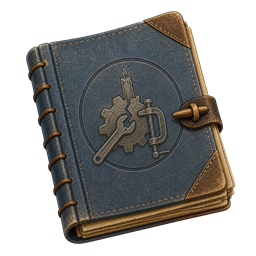
A Morcant devotion and maintenance order teaching that honest inspection, safe work, proper materials, and repairs made before failure are prayers performed with tools.
Morcant Below is honored wherever pressure stands on one side of a wall and living people stand on the other. The shrine may be carved stone, a stamped plate, a lamp beside an engine, or a clean place where the tools are returned after work.
Prayer prepares the worker to give the machine full attention. It does not tighten a loose fitting, replace a cracked seal, clear a blocked intake, or restore spoiled oil.
Begin before opening the machine.
Identify what it does and what changed. Ask the person who operates it. Check the previous repair marks. Determine whether the system is loaded, pressurized, charged, hot, moving, or holding weight.
Isolate every danger. Test the isolation. Tell another worker what you are about to do.
These acts are not separate from prayer. They are the first part of it.
If the machine is an automaton capable of understanding the work, explain the repair and ask for consent before opening its body. Emergency stabilization may begin when it cannot answer. Optional alterations must wait. A work assignment is not permission to remove memories, change personality, or replace parts the automaton has chosen to keep.
First prayer: Morcant Below, let no pride enter before the tools. Let the fault be found as it is, not as we hoped it would be.
Inspect before replacing. Look for wear, heat, corrosion, loose connections, contamination, damaged wards, foreign material, and failures caused by earlier repairs. Test the supply before blaming the machine. Many pumps have been dismantled because nobody checked whether the intake pipe was empty.
Find the cause, not only the broken part. A new bearing will fail if the shaft remains misaligned. A new seal will split if pressure exceeds its rating. An alarm will return if someone clears the warning and leaves the damage untouched.
Use the correct replacement where one is available. When substitution is necessary, mark the new material and its safe limit. A temporary repair must be obvious to the next worker. A hidden patch becomes a trap handed to another shift.
Second prayer: Honor the hands that built what remains. Honor the hands that repaired it before us. Add no concealed weakness to their work.
Relic machines require restraint. Stop when a component cannot be identified, when the response differs from every known control, or when the machine answers a test that was not addressed to it. Unknown function is not permission to continue. Secure the area and call someone qualified to examine it.
After repair, restore power in controlled steps. Test ordinary operation, alarms, guards, stop controls, and the exact fault that began the work. Do not declare success because the machine moved once. A repair is complete when the machine performs its task safely under the conditions it is expected to face.
Return every cover, guard, and lock. Clean the site. Leave a clear account of the fault, cause, replaced parts, substitutions, tests, and limits that remain.
The old Korr devotion says, "Under weight, keep faith." Some supervisors use this as an order to endure whatever burden they impose. That is not its meaning.
Stone supports weight because a builder chooses the right stone, measures the load, and gives it a stable foundation. Faith under weight means refusing to lie about what a structure, machine, or worker can bear.
Morcant is not honored by a mechanic reaching into moving gears to prove courage. A miner entering an unsupported cut does not make the stone holy. A cracked housing remains cracked after a manager calls it surface wear.
A worker may stop unsafe work, request another set of hands, and state that a deadline cannot be met without risking lives. The warning protects the crew and everyone who will depend on the repair afterward.
Supervisors have their own duty. Provide time, parts, ventilation, light, and enough people. Do not reward the crew that conceals damage and punish the crew that finds it. If every inspection reports a perfect machine and every breakdown arrives without warning, the inspection has failed.
When the shift ends, return the tools and tell the next workers what still concerns you. Do not make them discover your uncertainty through injury.
Maintenance rarely looks miraculous. A door opens. Air stays inside. Water reaches the people waiting for it. A lift arrives, a pump turns, and a roof remains above the workers. Nothing terrible happens, so most people never notice the work.
Closing prayer: The work continues because the repair was done. Let the next worker find a sound machine and no hidden fault.
Prayer does not replace repair. Repair performed with patience, skill, and honesty is the prayer made physical.