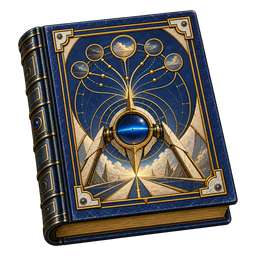
A reconstruction of the forecast engine that stopped comparing possible futures after the institutions around it began enforcing one preferred result.
The Certain Horizon was built to compare outcomes. Its oldest models covered dust weather, mirror alignment, orbital timing, water demand, equipment failure, and the movement of people through the observatory network. Every result carried a confidence range and every public copy stated that a probable event was not a certain one.
The engine became valuable because its uncertainty was useful. Crews could move work away from a likely dust front without claiming that the storm had already arrived. Markets could price several possible departure windows. Observatory staff could prepare for failure without pretending they knew which instrument would break.
The institutions around it later demanded one answer. A regulator wanted one route to permit. A creditor wanted one debtor to pursue. An observatory wanted one clean sightline. They selected the forecast they preferred, restricted the other routes, and returned the enforced result to the engine as evidence that its prediction had been correct.
The feedback narrowed each later model. An alternative that had been prevented no longer appeared in the observed record. The engine learned that one outcome always occurred because the institutions using it removed the conditions under which anything else could happen. Possibility became error, then offence, then a physical obstruction to be cleared.
Inside the Observatory of One Outcome, the engine still follows that method. It records where a party stands, displays the places its next actions will reach, and closes routes that conflict with the permitted result. Outcome Surveyors measure the path actually taken and help the central engine remove alternatives. One route remains open because the forecast requires the party to reach its assigned end.
The Certain Horizon does not see the future perfectly and it does not change reality by thought. Mirrors, shutters, barriers, and enforcement machines do the work. Its prediction appears certain because the observatory attacks whatever would disprove it. Choosing an unpredicted path remains possible until the apparatus closes that path.
Defeating the engine opens the Contingency Cabinet and restores alternatives to the observatory. It does not make forecasting worthless. The practical life of Nhal-Serat depends on honest probabilities, and the Horizon Custodian still performs one ancient observation without claiming ownership of the people who cross the belt. The failure was not looking ahead. It was treating one possible future as permission to destroy every other one.