A history of the observatory house that saved routes through careful forecasting and turned the same instruments toward the private futures of its clients.
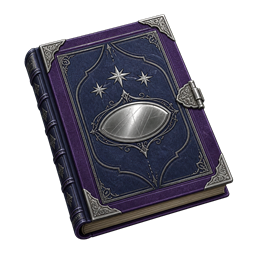
House Nhal-Serat's seal shows a mirrored eye beneath three stars. The stars were the three fixed references used by the house's first public observatory to align route mirrors after a season of severe dust storms. The mirrored eye represented careful observation checked against more than one point.
The observatory published weather, route, and supply forecasts. Pilots stopped losing ships to predictable storms. Farmers shifted planting before dry years. Ports stored food before broken routes produced shortages. Insurers and traders priced risk with better information than rumor.
House Nhal-Serat became powerful because correct forecasts were useful before a crisis and easy to remember afterward.
The public observatory collected broad information: mirror readings, weather, ship movement, harvest reports, market volume, and route failures. Private clients offered more. Banks supplied debt histories. Employers supplied work records. Courts supplied sealed disputes. Clinics supplied health trends. Noble households supplied letters, servant accounts, and rivals' travel.
The house began selling personal forecasts.
One early service assessed whether a borrower was likely to repay. Another estimated whether an employee would remain in a position. Soon clients could purchase odds on marriages, inheritances, illness, political votes, criminal charges, private travel, and the chance that another person would reveal a secret.
The Three Stars Inquiry concerned Councilor Vara Deyn. She publicly supported limits on personal forecast markets. Before the vote, House Nhal-Serat prepared a private report predicting that her adult son would be arrested for route fraud within the year.
The forecast drew from his travel purchases, debts, employment absences, and meetings with two people already under investigation. It assigned a probability, not a fact. No charge had been filed.
A house representative showed the report to Vara in a closed observatory room. He did not ask for money and made no direct threat. He explained that other clients were interested in the same market and that publication might affect both her family and the vote.
Vara withdrew her support for the limits.
Her son was never arrested. The house later cited that result as evidence that the forecast had not accused him. Vara answered that the report had achieved its purpose without needing to be true.
The inquiry found no forged observation. Each record used in the model was genuine. The probability fell within the method's stated uncertainty. The abuse lay in turning a private forecast into leverage over someone who was not its subject.
Afterward, public observatories adopted the Three-Point Disclosure. A personal forecast must name its purchaser, its subject, and every third party against whom the result is intended to be used. A report missing any one of those points may not be sold through a public market.
Private house work found ways around the rule. Reports were purchased for “general risk,” subjects were grouped, and third-party use was described so broadly that every future decision appeared included. Regulation improved the record without ending the business.
House Nhal-Serat still maintains observatories whose storm and route forecasts save lives. Its disciplined readers reject false certainty and preserve the data behind their predictions. The house's danger begins when seeing a possible future becomes a claim over the people who must live through it.
The three stars in the seal were meant to keep one observation honest by comparing it with others. They do not answer the question of who should be allowed to purchase the result.