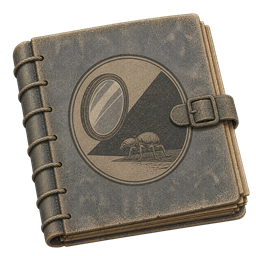
A desert field guide explaining how the Mirror Belt's plants and animals survive by following shade, reflected light, and the schedules of its observatory arrays.
Open ground in the Mirror Belt becomes dangerously hot under direct light. Mirror arrays create hard bands of shade that move as the instruments turn. Native life uses those bands as paths, feeding grounds, and shelter. Carry the current array schedule before leaving a cooled vault.
Prism Thornwood: This twisted desert tree grows translucent thorns that split harsh light into smaller shade patterns around the trunk. The wood survives long dry periods, but the thorns remain sharp after cutting. Approach from the shaded side and protect the eyes when a branch turns in direct light.
Lenssilver: This bright conductive ore is used in precision mirrors, sensor lattices, and forecasting instruments. Exposed deposits reflect enough light to burn skin and damage vision. Mark the sun angle before working a vein.
Dune Strider: These tall runners follow thermal shadows between mirror fields. Their long legs keep their bodies away from hot ground. Strider tracks usually mark the shortest route that remained survivable at the time they crossed. Shade moves, so an old track is not a current guarantee.
Mirrorback Raptor: These lean reptiles use their reflective scales and the array faces to hide their approach. They hunt Lenssilver Scarabs and keep the insects from stripping every mirror. A reflection that moves against the array is usually closer than it appears.
Parallax Aloe: The layered leaves hold a cooling gel used on burns. The gel also refracts simple inspection beams, so observatory crews keep harvested leaves away from active sensors.
Comet Saffron: This night-blooming spice appears during predictable meteor seasons. Gather it after the flowers open and before the array shutters change the local light. The harvest is rare because the blooming period is short, not because the plant is impossible to cultivate.
Riskroot: The strength of this stimulant root varies greatly between plants. Measure each prepared dose. Size, color, and growing location do not predict potency well enough for safe use.
Quietshade: This dark mat herb grows beneath mirrors and other permanent shade. It is used in sleep medicine and compounds that reduce sensor response. Quietshade Stingers hunt in the same cool bands. Check when the shadow is scheduled to move before kneeling to harvest.
Lenssilver Scarab: Scarabs strip silver from mirror faces and add it to their shells. Older insects can blind anyone facing them at the wrong angle. Their damage to the arrays is expensive, but removing every scarab would also remove the main prey of the Mirrorback Raptors.
Prismthorn Lurker: These predators wait among dense transparent thorns, where refraction creates false outlines. Listen for movement instead of striking at the first shape seen. A lurker inside a thicket is usually nearer than its image.
Shade is habitat, not empty space. Before moving an array, closing a shutter, or clearing growth, check what is using the shadow and where that shadow will move next.