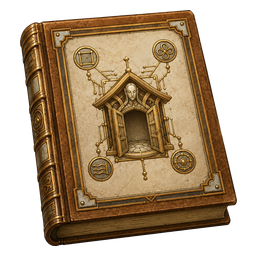
A review of the Unclaimed Household, the prepared colony's arrival assignments, and the living officers who were supposed to change the plan when real families reached Asterhome.
Asterhome was prepared for arrival at the scale of a complete colony. Homes were finished, fields divided, school places counted, clinic capacity reserved, and stores packed for households whose names remained aboard Orison. The colony did not wait for construction. It waited for people.
The Unclaimed Household was the central allocation system for that arrival. It linked each household to a home, food allotment, school places, medical records, tools, pasture access, and responsibilities within the settlement. It was a civic coordination system, not a model of one perfect family and not a machine designed to decide how every household should live.
Living receiving officers were essential to the plan. They could record that a family had changed during the voyage, that two households wanted to live together, that somebody refused an assigned trade, or that a prepared home did not fit the people standing in front of it. The system proposed an allocation. The officers and settlers were supposed to make it true or change it.
Orison sailed for Asterhome, became trapped in the Cradle Drift, escaped the ring, and crashed on Gogi-One. No colonist or receiving officer reached the prepared world. Asterhome's resident caretaker automata maintained the homes and public systems but did not claim them, because the arrival process never began.
When an expedition enters the Square of Open Doors, the Household recognizes an arrival without recognizing that it is the wrong arrival. It assigns the party to the first open places, starts the prepared services, and refuses to release any occupant while other required places remain empty. Household Attendants keep the rooms ready and guide assigned people back when they leave their station.
The welcome is not false. The beds are clean, the meals are safe, the work is useful, and the colony can support the people it tries to keep. The failure is that the system treats usefulness and abundance as consent. It cannot understand why someone would refuse a good home or why an incomplete settlement might be better than a completed one built from unwilling occupants.
The Unclaimed Household is separate from the Asterhome Covenant Keeper. The Keeper offers the genuine settlement covenant but cannot provide the return obligations that a living officer was meant to read. The Household has moved past the offer and begun filling the plan. Defeating it ends the assignment. It does not decide who should inherit Asterhome. That question remains open because no machine maintaining the colony can consent on behalf of the people who may one day live there.