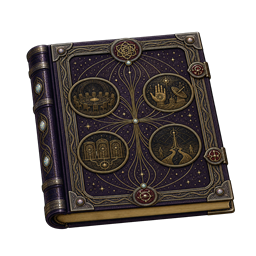
A sealed collection of cases proving that ancient minds in distant systems can alter memory, belief, and public history without crossing the space between them.
This casebook uses Conductor for an ancient telepathic being whose mind remains seated in one system while its influence reaches civilizations around other stars. The term describes control exercised across distance. It does not mean the being conducts music.
Conductors are living minds, not machines. They are not Shepherds, relic intelligences, gods confirmed by doctrine, or functions of the Chronicle Machine. Their age, species, and original bodies remain unknown.
The following cases establish what they can do.
Case One: The agreement at Pel Orra
Seven negotiators met to settle access to Pel Orra's water stores. The first two days of testimony survive in complete recordings. Every delegate opposed permanent control by the station governor.
On the third morning, all seven remembered making a private promise to the governor before negotiations began. Each described the same room, the same cup on the table, and the same sentence spoken in reply. No such meeting appears in the station's door records or continuous security feed. The room they described had been dismantled nine years earlier.
The delegates signed away the water stores. Under separate telepathic examination, each memory produced the same response to questions that had not yet been asked: a pressure behind the eyes and the instruction to preserve the promise.
The agreement was later overturned. Four delegates continued to remember the meeting after accepting proof that it never happened.
Case Two: The saint of Rellin Vale
Rellin Vale had no recorded patron saint. Within six months, households across the valley began leaving identical offerings to a figure called the Open Hand. Children, workers, magistrates, and shrine staff all claimed the custom had existed since their grandparents' time.
Older prayer books contained no Open Hand. New copies included the name in passages whose ink and paper matched the original pages. The writers who made those copies remembered restoring damaged text, although no source for the restored passages could be found.
Telepathic readers detected the same foreign pattern in the strongest believers: a calm certainty that became painful when examined directly. The pattern did not state a doctrine. It made the doctrine feel remembered.
The offerings directed food and metal toward an abandoned transmitter site. When the site was opened, the foreign pattern ceased. Most residents kept the custom because it had become meaningful to them, even after learning how it began.
Case Three: The order that crossed three systems
Twenty-two archive workers in three systems dreamed of opening sealed astronomy collections on the same night. None knew the others. Each dream used the worker's own language and familiar dead, but every dream requested the same obsolete stellar survey.
Eleven workers obeyed. The opened records contained observations of one distant system made centuries apart. When combined, the records revealed a long change in the output of an object at that system's center.
The workers received no further dream. The event had gathered information for a mind that could reach the archives but could not enter their sealed rooms by itself.
Case Four: The two childhoods of Sena Vey
Sena Vey remembered growing up in a mining town and in an orbital school. Both childhoods included complete families, injuries, lessons, private embarrassments, and grief. Physical evidence supported the mining town. The orbital school had never enrolled anyone under her name.
The second childhood was not random. It taught Sena a technical method for opening a relay built in the same distant system implicated by the earlier cases. She had never studied that relay design.
Sena opened the relay under observation. A telepathic presence responded before the machine produced a signal. It addressed the examiners through Sena, thanked them for returning access, and named observations made during all four cases.
The contact lasted eleven seconds. Sena remembered none of it afterward.
These cases show that a Conductor can place or strengthen memories, create shared belief, speak through another mind, use familiar people as the faces of a dream, and guide institutions toward work whose purpose they do not understand. Repeated influence can become custom, law, worship, or accepted history without the people living inside it recognizing an outside source.
This is manipulation, not complete control. People resist, reinterpret, expose, or refuse what they receive. The Open Hand became a practice of feeding neighbors after its transmitter purpose ended. Five archive workers ignored the dream, and six reported it before touching the seals. Sena Vey chose to participate in the final test after receiving a full explanation of the risk.
A Conductor's reach does not make every belief false or every unusual memory foreign. The cases require a repeated pattern, independent evidence, and a demonstrated link. Suspicion alone is not enough. Accusing every religious person, survivor, or witness of mental control would create another way to dismiss them.
The hands are real. They reach farther than ships. They are not the only hands shaping history, and they do not close completely around it.