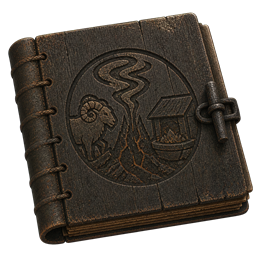
A heavy-paper field guide to the animals, fungi, plants, timber, and ore found around the Deepforge vents and basalt pastures.
The Deepforge Moons are inhabited and working. This guide covers the vent country, pastures, and industrial routes beyond the main settlements, including abandoned pressure works. Check local seal marks before entering a closed route. A useful plant beside an unsafe shaft is still beside an unsafe shaft.
Anvilwood: These squat geothermal trees grow on basalt shelves where their roots can reach steady warmth. Mineral deposits make the wood dense enough to resist high gravity and repeated impacts. Inspect the roots before cutting. An Anvilwood leaning away from a crack may be holding the shelf together.
Deepforge Ore: This pressure-formed stone carries metals used in heavy tools, armor, and resonant industrial parts. A bright newly exposed band is not proof that a vein is safe to work. Test the surrounding stone, brace the cut, and keep loose ore off rail beds and pressure-door tracks.
Basalt Ram: Rams graze the pale mineral crust that grows on cooled flows. They have broad bodies, dense horns, and split hooves suited to steep ground. A herd will not settle on a flow that is still moving beneath the surface. Their presence is a useful sign, but it does not replace a ground test. When startled, a ram usually runs uphill.
Vent Boar: These animals root near active vents and expose salts and metals that collect beneath the warm ground. Their feeding keeps mineral crust from sealing some vent mouths. Vent boars are heavy through the front, aggressive at close range, and comfortable on ground that burns ordinary boots. Their hide is used for forge gloves and other heat-resistant work gear.
Cinder Lichen: This dark lichen grows on stable stone near controlled heat. It is used in fire-resistant compounds. Scrape only the outer growth and do not harvest from a vent face that changes temperature during the work.
Pressure Root: The compact layered root remains medicinal under high gravity and is used in treatments for strain and pressure injury. Take the smaller side roots and leave the central crown in place.
Forgecap: This copper-colored fungus is a common food when grown near controlled warmth. Wild Forgecap from an exhaust channel may absorb dangerous industrial waste. Do not identify safety by color alone. Check the bed, airflow, and surrounding work records.
Ash Balm: This grey succulent stores a paste used on heat cracks and deep pressure bruises. Harvest firm outer sections. Soft black areas indicate heat damage or contamination and should not be used on skin.
Wildlife and forage are part of the working environment. Vent boars keep vents open. Basalt rams help identify stable flows. Lichen and roots show where heat and moisture have remained consistent. Learn what each living thing indicates before treating it only as meat or material.